
NGO Management
How to Start an NGO in India: Complete Step-by-Step Guide
Learn how to start an NGO in India with this step-by-step guide. Understand Trust, Society, Section 8 registration, 12A, 80G, and compliance requirements.
Loading…
Learn how to start an NGO in India with this step-by-step guide. Understand Trust, Society, Section 8 registration, 12A, 80G, and compliance requirements.
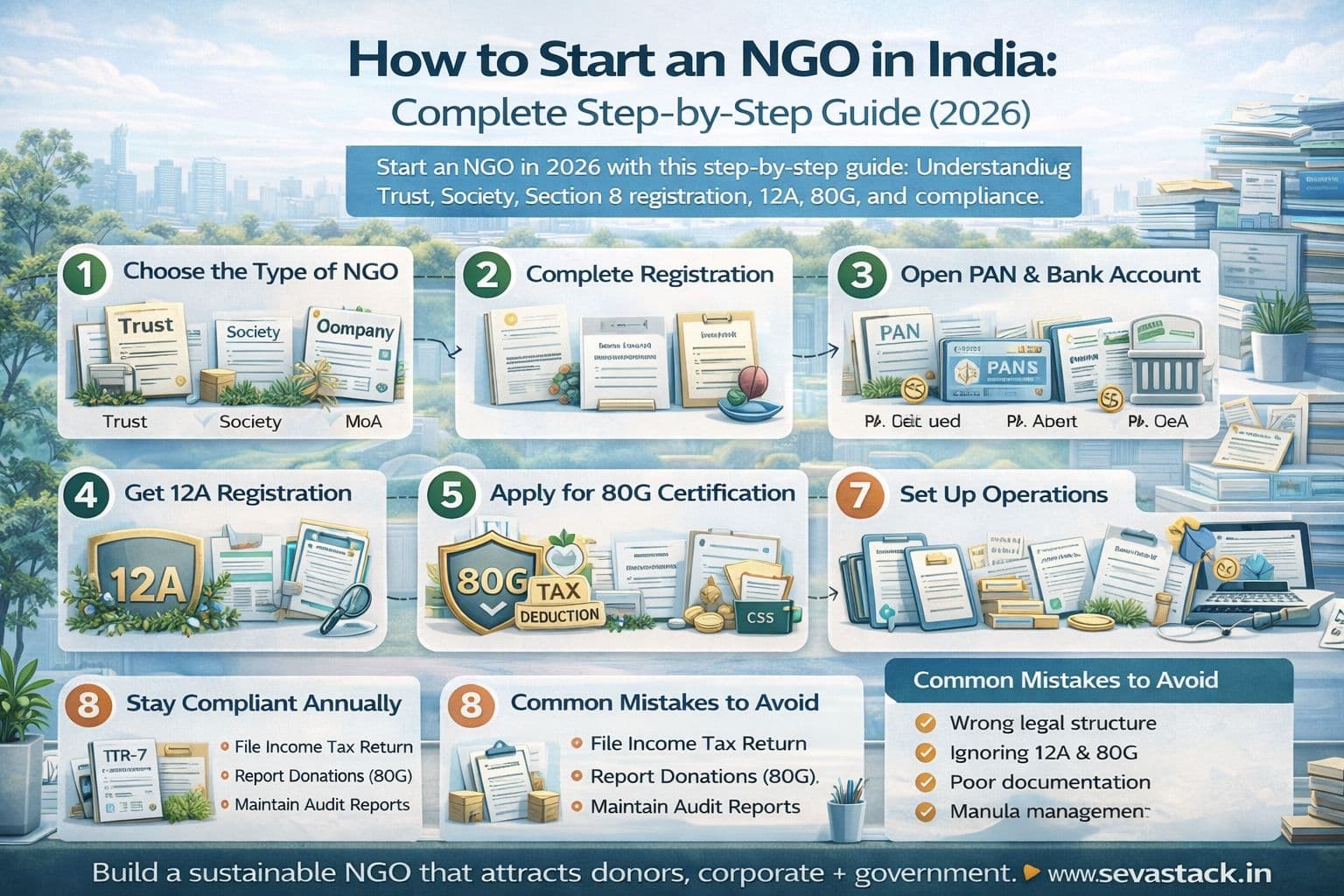
Starting an NGO in India is a powerful way to create real social impact.
But before you begin working on your mission, one important step comes first:
👉 Choosing the right legal structure and completing proper registration
This guide will help you understand everything in simple terms.
Many people start with passion.
But without proper structure, NGOs struggle with:
Legal issues
Funding challenges
Compliance problems
A strong foundation ensures:
✔ Credibility
✔ Funding opportunities
✔ Long-term sustainability
In India, NGOs can be registered in three main ways:
Best for: Family-led or small initiatives
Key Features:
Requires minimum 2–3 trustees
Easy to set up
Less compliance
Limitations:
Lower credibility for large funding
Less transparency
Best for: Community-based organizations
Key Features:
Requires minimum 7 members
Democratic structure
Suitable for state-level work
Limitations:
Moderate compliance
Slower decision-making
Best for: Professional NGOs and CSR funding
Key Features:
Requires minimum 2 directors
High credibility
Preferred by corporate donors
Limitations:
Higher compliance
More documentation
Once you choose the structure:
Draft legal documents (Trust Deed / MOA / AOA)
Submit registration with relevant authority
Get registration certificate
After registration:
Apply for PAN (Permanent Account Number)
Open NGO bank account
This is required to:
👉 Receive donations
👉 Maintain financial records
12A allows your NGO to:
👉 Avoid paying income tax
Without 12A, your NGO income is taxable.
80G helps your donors.
It allows them to:
👉 Claim tax deductions on donations
This increases your chances of receiving donations.
If you want corporate funding:
👉 CSR-1 registration is mandatory
Without it, companies cannot fund your NGO under CSR.
Before starting activities, ensure:
Proper record keeping
Donation tracking system
Documentation process
This helps in:
✔ Compliance
✔ Reporting
✔ Transparency
After starting, your NGO must:
File ITR-7 annually
File Form 10BD (donation reporting)
Issue Form 10BE to donors
Maintain audit reports
Choosing wrong legal structure
Ignoring 12A and 80G
Poor documentation
No compliance system
Managing everything manually
Today, NGOs are evaluated by:
Companies (CSR funding)
Donors
Government
They expect:
👉 Transparency
👉 Compliance
👉 Professional systems
NGOs with proper setup grow faster.
Starting an NGO is not just about intention.
It’s about building a system that can sustain impact.
If you:
Choose the right structure
Complete registrations
Maintain compliance
You create a strong foundation for long-term success.
If you want to manage donors, compliance, and operations in one place:
80G receipts, donor CRM, FCRA compliance, all in one platform.
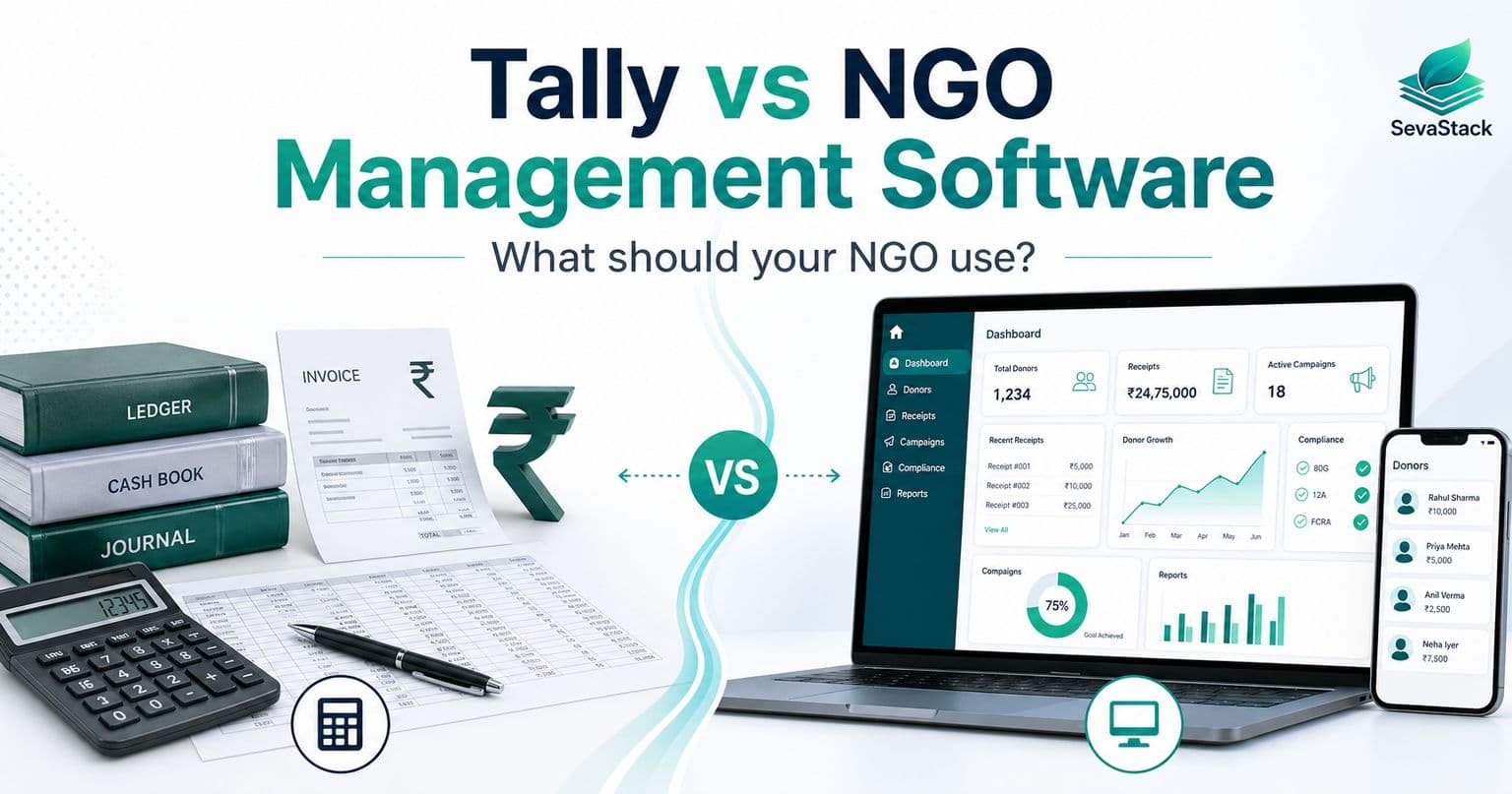
Tally is useful for accounting, but NGOs need more than accounts. Learn the difference between Tally and NGO management software, and when your NGO should use both.
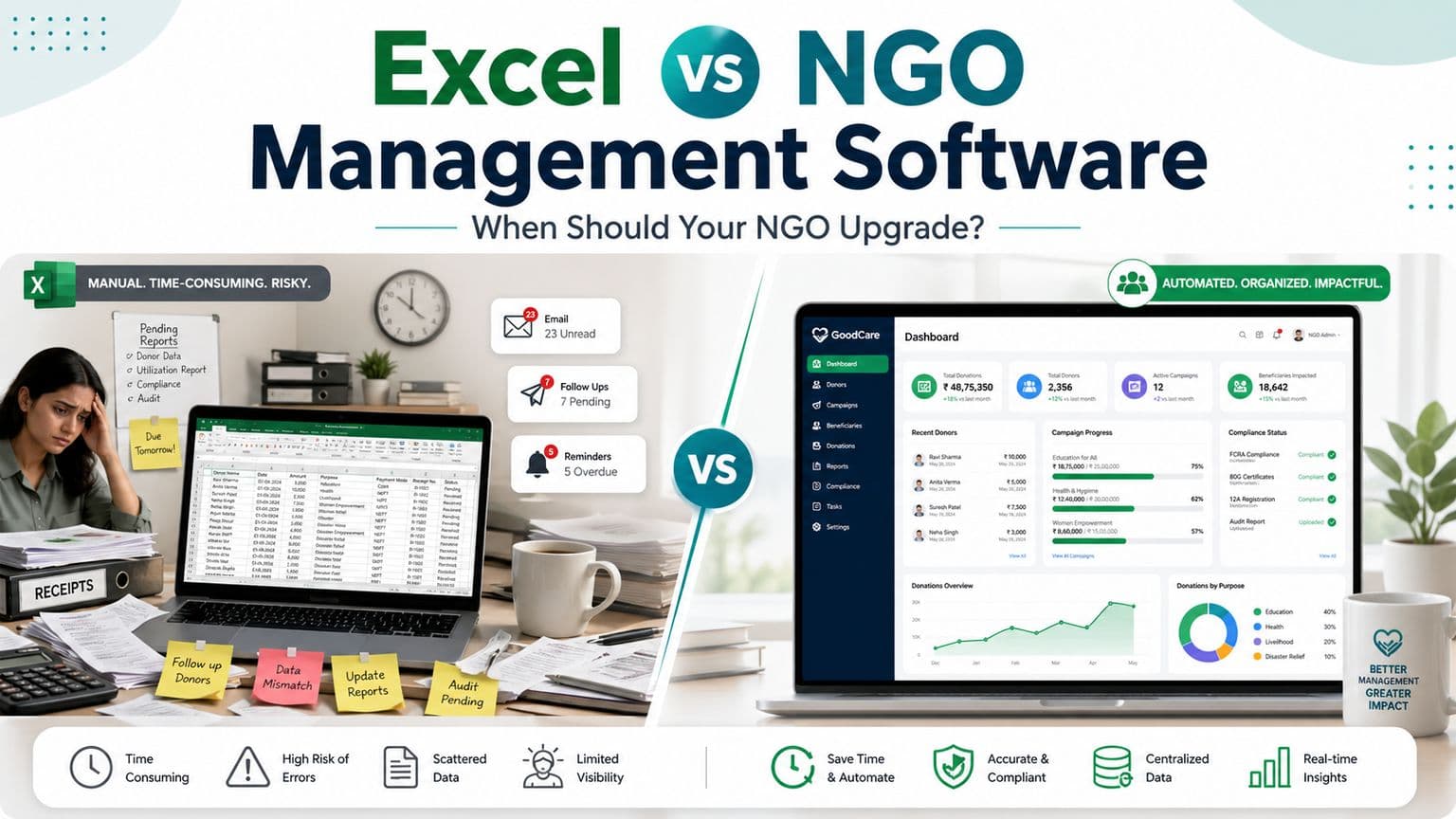
Still using Excel for your NGO? Learn when it’s time to upgrade to NGO management software and how it helps improve donor tracking, compliance, and growth.
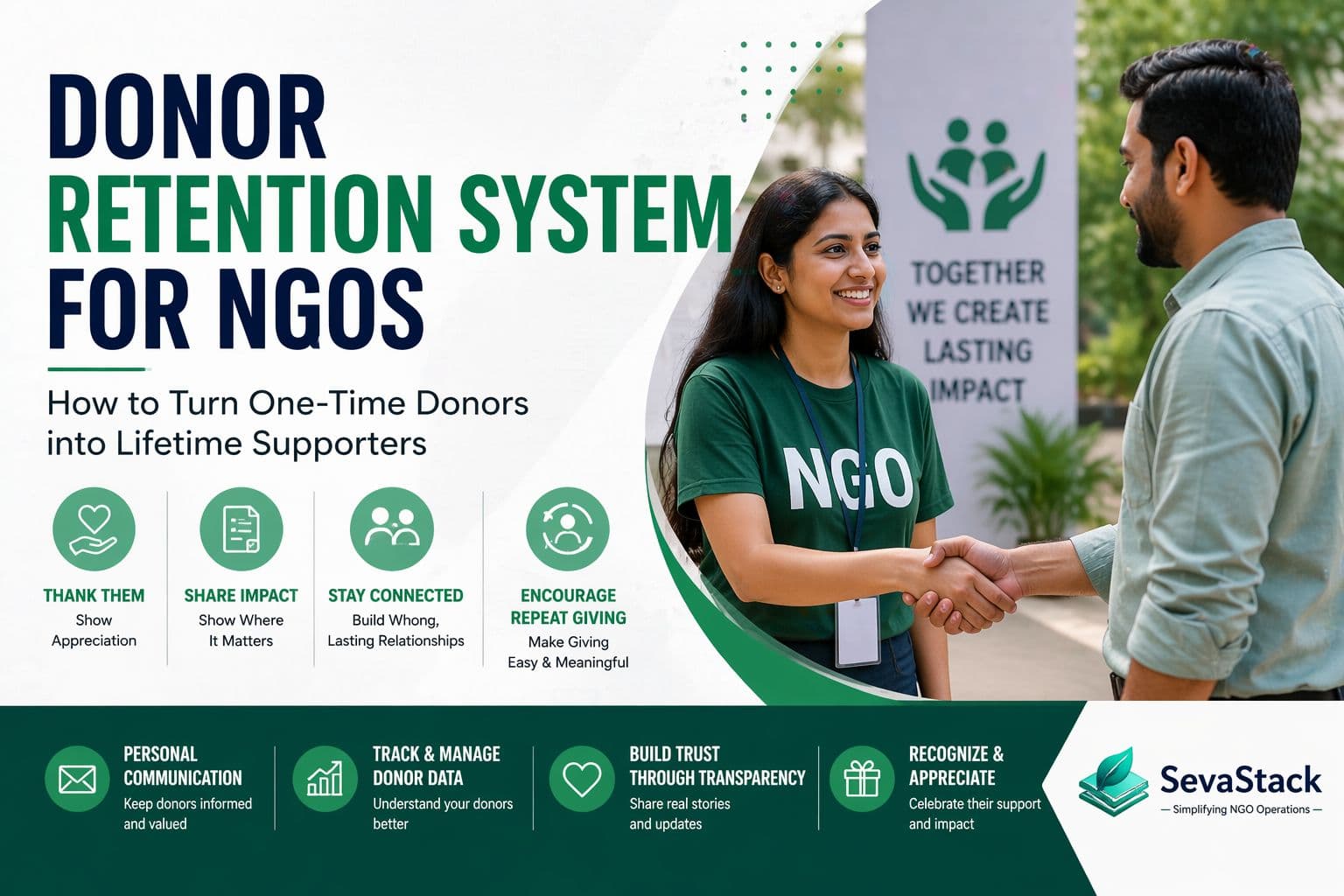
Learn how NGOs can build a strong donor retention system to turn one-time donors into long-term supporters with simple, practical strategies.
Manage donors, automate 80G receipts, track FCRA compliance, and grow your impact.
No credit card · Free forever plan